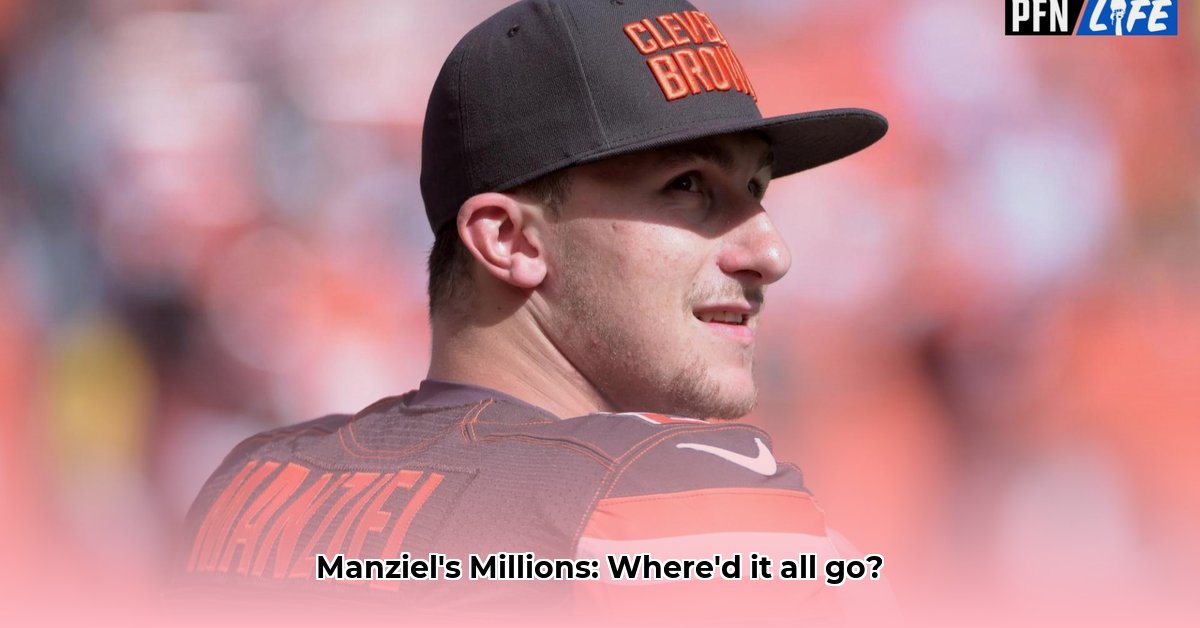
Johnny Manziel. The name conjures images of electrifying college football plays, a Heisman Trophy, and the promise of NFL stardom. But the story of "Johnny Football" is far more nuanced than just touchdowns and dazzling runs. It's a cautionary tale about the precarious nature of wealth, especially for high-profile athletes, and the devastating consequences of poor financial management. This isn't merely a recitation of his net worth – a figure shrouded in uncertainty – but an examination of the factors that led to his financial rollercoaster and the lessons we can learn from his journey. For more details on his financial journey, see Manziel's Net Worth. His college career generated astronomical projections. Some experts estimated his potential earnings at over $100 million, fueled not just by his undeniable football talent but also by his magnetic personality, making him a highly sought-after endorsement commodity. Major brands clamored for a piece of the "Johnny Football" magic. The future seemed limitless.
However, the NFL chapter didn't quite unfold as predicted. While his professional career yielded a significant salary – approximately $7.7 million – it paled in comparison to the initial hype. Including endorsements, his total career earnings are estimated around $17.7 million. A far cry from the projected hundreds of millions. This disparity begs the question: where did all that potential go?
Determining his precise current net worth proves surprisingly difficult. Estimates vary dramatically, ranging from around $1 million in early 2024 to a much higher $6 million just months earlier in August 2023. This discrepancy underscores the complexities of personal finance, the inherent volatility of assets, and a lack of complete public information. The financial life of even a highly publicized individual remains, to a large degree, a private matter.
Manziel's financial narrative is far richer than simple numbers. It's a human story, a cautionary tale about the perils of unchecked spending, the impact of legal battles, and the crucial role of sound financial planning. His well-documented struggles with alcohol and legal issues significantly hampered his income. High-profile endorsements, such as a lucrative Nike deal, evaporated, drastically altering his financial trajectory. Millions that once seemed secure vanished.
Was this a failure of financial planning alone? Professor David R. Young, a specialist in sports finance at the University of California, Berkeley, comments, "Manziel's situation highlights the critical need for proactive financial literacy and professional guidance, especially for young athletes under immense pressure. The lack of both contributed significantly to his challenges."
What vital lessons can we glean from Manziel's financial odyssey? Firstly, financial literacy is paramount. For athletes facing intense pressure and sudden wealth, this is non-negotiable. Secondly, seeking expert financial advice from professionals who understand the unique demands of athletic careers becomes imperative. Even exceptional talent doesn't provide immunity from financial setbacks; long-term financial security requires meticulous planning and responsible decision-making. Finally, meticulously safeguarding one's public image significantly impacts future earning potential. Reputation, often overlooked, is a highly valuable asset.
Looking ahead, the future of Manziel's net worth remains uncertain. He could leverage his experiences, perhaps through motivational speaking or entrepreneurial ventures, to generate new income streams. His future financial stability hinges on his coming decisions and the efforts he invests in building a more secure financial future. His story stands as both a cautionary example and a potential narrative of redemption.
Actionable Insights and Risk Mitigation
The following steps offer strategic considerations for various stakeholders:
1. For Johnny Manziel: Prioritize debt management and explore diverse income opportunities. Develop a comprehensive financial plan with professional guidance and invest wisely for long-term growth.
2. For NFL Teams and Agents: Implement proactive financial education programs and mentorship for athletes. Invest in holistic support, encompassing both mental and financial well-being.
3. For Sports Marketing Firms: Conduct thorough risk assessments, prioritize ethical brand associations, and focus on building long-term athlete relationships built on mutual support and development.
The Risk Landscape for High-Profile Athletes
High-profile athletes face several key risks:
- Off-field Misconduct: (High Likelihood, Extremely High Impact) Mitigation: Strict contracts, comprehensive athlete support programs, and proactive mental health resources.
- Injury: (Moderate Likelihood, Extremely High Impact) Mitigation: Robust insurance policies, diversified investments, and career transition planning.
- Poor Financial Management: (High Likelihood, High Impact) Mitigation: Financial literacy training, professional financial advisors, and regular financial oversight.
- Endorsement Loss: (Moderate Likelihood, Moderate Impact) Mitigation: Diversified endorsement portfolio and a carefully cultivated strong, positive personal brand.
- Market Fluctuations: (Moderate Likelihood, Moderate Impact) Mitigation: A diversified investment portfolio and long-term investment strategies.
Johnny Manziel's story, unique in its specifics, serves as a powerful reminder that financial success in professional sports requires more than just exceptional talent. It's a multifaceted equation demanding shrewd financial planning, conscious decision-making, and a robust support system. The lessons learned, unfortunately, came at a steep personal cost.